| Main concern | Roots and structures sharing restricted space |
|---|---|
| Seedling sites | Buildings, posts and host trees |
| Universal setback | Not established by the sources here |
| Existing large tree | Assess before root cutting or excavation |
Why does the growth form create conflicts?
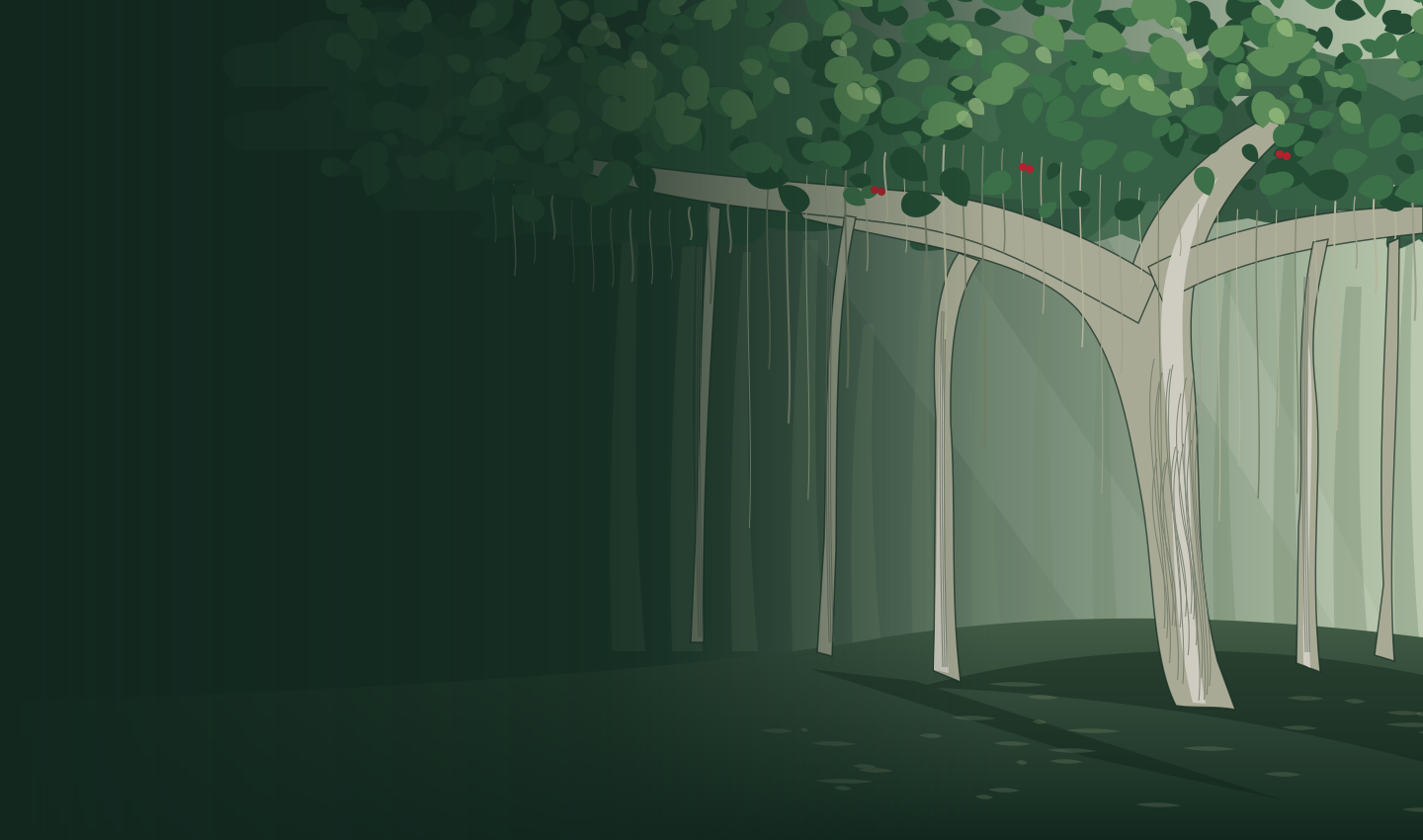
The familiar hanging roots are only part of the system. Some reach the soil, thicken and help support a spreading crown. A tree that looks like one trunk at planting can become a much wider living structure. Underground roots also occupy space beyond the visible trunk.
UF/IFAS specifically warns of infrastructure damage from banyans. The practical question is not whether roots are “aggressive” in the abstract, but whether the tree and the proposed building, path or utility can coexist at that site over time.
How far from a house should a banyan go?
No scientifically supported universal clearance is offered here. A number copied from a garden forum can conceal differences in foundations, soil, species and the intended life of the tree. A tree in an open estate and one beside a narrow urban courtyard present different decisions.
Map the mature crown and accessible rooting space with an arborist before making a permanent planting. If the plan depends on repeatedly cutting major roots or keeping a large tree small forever, reconsider the plant choice rather than treating that work as routine maintenance.
What if a seedling is growing from a wall?
Identify the plant and its route through the structure before pulling it. What appears to be a small shoot can be attached to roots hidden in joints or behind masonry. Removing vegetation and repairing the underlying defect are different parts of the job.
For a historic building, retaining wall or elevated location, involve the appropriate building professional as well as an arborist. Photograph the location and note any cracking or movement. Do not climb onto an unsafe structure to inspect a seedling more closely.
Can you simply cut troublesome roots?
Cutting roots can change a tree’s support and access to water. That makes it different from removing an unwanted shoot in a pot. Discuss the tree’s condition, excavation depth, affected roots and nearby targets before work begins; visible canopy health alone does not settle the question.
The pruning and removal guide describes what to put in a professional brief. For a new plant, return to the growing guide and compare a suitable container or a smaller species with the demands of an in-ground banyan.
Sources
- Ficus benghalensis: species overview and impactsUniversity of Florida IFAS · Accessed 2026-11-24
- Tree owner resources: tree riskInternational Society of Arboriculture · Accessed 2026-11-24
- Ficus benghalensisNational Parks Board, Singapore · Accessed 2026-11-24