| Small plants | Light maintenance with clean tools |
|---|---|
| Mature trees | A site-specific arborist assessment |
| Prop roots | Potential structural supports |
| Removal planning | Include the remaining roots and site |
What is the purpose of the pruning?
Define the problem before choosing a cut. Removing a damaged small shoot, changing the silhouette of a houseplant, clearing a road and reducing a risk beside a building are not interchangeable aims. A written objective makes it easier to judge whether the proposed work actually addresses the concern.
For a small container plant, begin with a healthy tree, clean tools and protection from sap. Avoid combining major crown pruning, extensive root work and an abrupt change in light as a first response to a struggling plant.
Why do prop roots need special care?
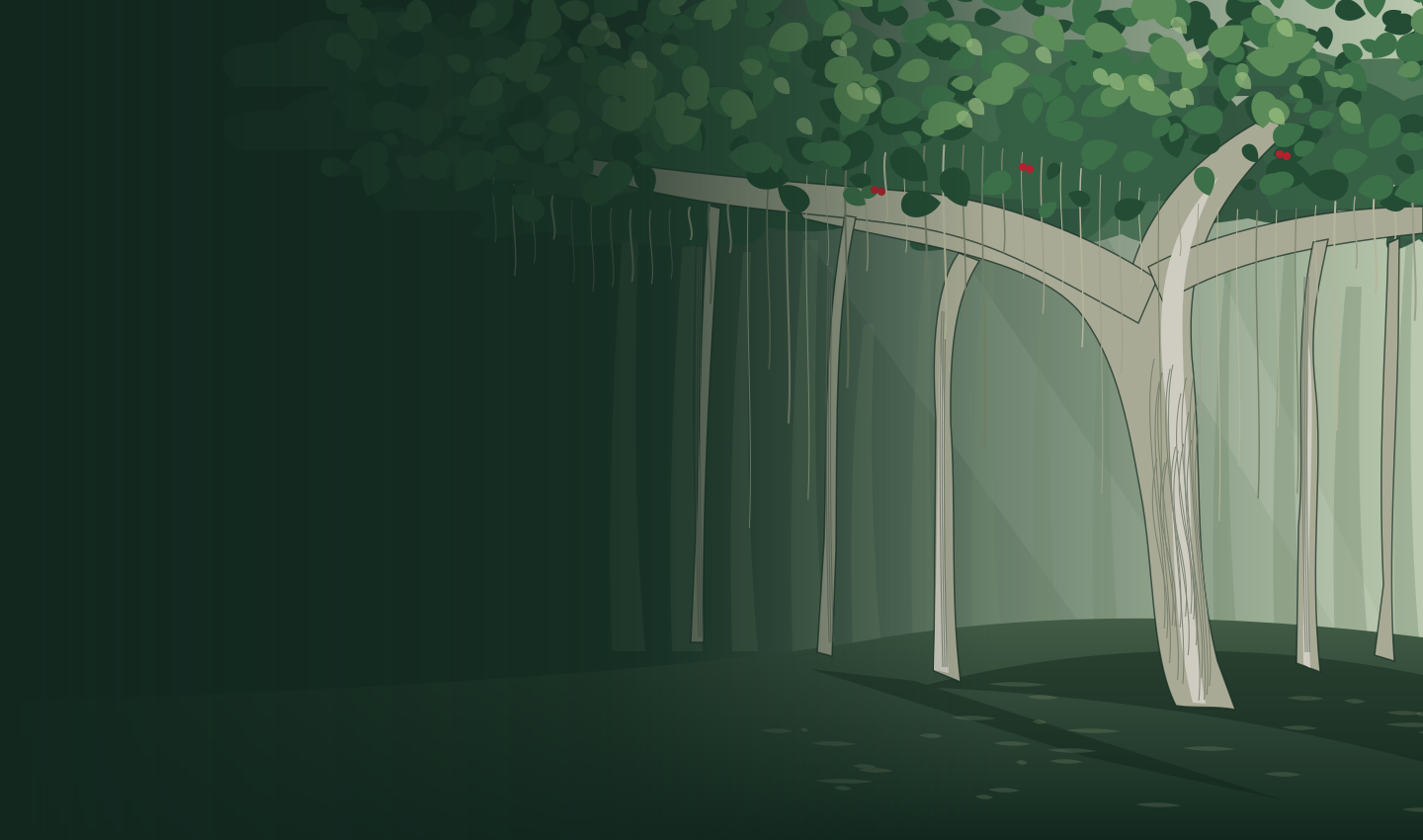
An established prop root may carry part of a branch’s load. It can look like a separate thin trunk even though it belongs to the same spreading tree. Removing it for access changes the structure you are trying to preserve.
Before any large-tree work, identify the original trunk where possible, the accessory trunks, major branch connections and the ground that supports them. The aerial-root guide explains the growth process; it cannot replace a structural inspection of a particular tree.
What should an arborist’s brief include?
Provide the location, species if known, recent photographs, the reason for concern and information about nearby buildings, utilities or planned excavation. Ask for a clear description of the work, responsibility for permissions, debris handling and the intended follow-up.
Where a tree stands near people or property, discuss risk assessment rather than asking for a percentage of the crown to be removed without context. Keep people clear of visibly broken or hanging limbs while arranging professional assistance.
What does removal involve beyond the crown?
Plan for the stump, rooted supports, access, adjacent vegetation and repair of the site. Banyan seedlings on structures may need coordinated tree and building work. The UF/IFAS species page directs Florida readers to local extension specialists for management recommendations.
This guide does not prescribe a herbicide concentration or an uninspected root-cutting method. Product labels, local rules and site conditions determine appropriate treatment. For an unsuitable proposed planting, preventing the conflict is simpler: use the root-space guide and the broader growing guide before planting.
Sources
- Ficus benghalensisRoyal Horticultural Society · Accessed 2026-11-24
- Ficus benghalensis: species overview and impactsUniversity of Florida IFAS · Accessed 2026-11-24
- Tree owner resources: tree riskInternational Society of Arboriculture · Accessed 2026-11-24